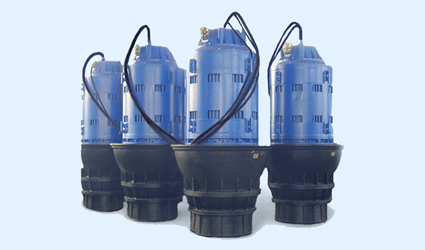
Submersible mixer pumps are critical components in modern fluid handling systems, widely used in wastewater treatment, industrial processing, and chemical applications. Combining the functionality of both a pump and a mixer, these devices efficiently circulate, blend, and homogenize liquids while maintaining stable flow rates and minimizing energy consumption. Their versatility, reliability, and compact design make submersible mixer pumps a preferred choice for municipalities, factories, and large-scale industrial operations seeking efficient and cost-effective fluid management solutions.
One of the primary advantages of submersible mixer pumps is their ability to handle liquids containing solids or suspended particles. In wastewater treatment plants, these pumps prevent sedimentation and sludge accumulation by continuously circulating wastewater, ensuring that solids remain in suspension. This improves the efficiency of biological treatment processes, prevents blockages in piping systems, and reduces the need for manual cleaning or maintenance. Submersible mixer pumps are also capable of mixing chemicals and additives uniformly in industrial applications, improving process consistency and product quality.
Durability and robust construction are key features of high-quality submersible mixer pumps. These pumps are typically manufactured using corrosion-resistant materials such as stainless steel, high-strength alloys, or specially coated metals to withstand harsh chemical environments and prolonged exposure to water or wastewater. Sealed motor housings and advanced bearing systems protect the pump’s internal components from water ingress, abrasion, and mechanical wear. This ensures long-term reliability even in challenging operating conditions, reducing downtime and maintenance costs.
Energy efficiency is another significant benefit of submersible mixer pumps. Unlike traditional above-ground mixers, submersible pumps operate directly within the fluid, eliminating energy losses associated with long shaft drives or belt systems. Modern designs often feature variable frequency drives (VFDs), which allow operators to adjust pump speed according to process requirements. This not only saves energy but also reduces mechanical stress, extends pump life, and allows precise control of mixing intensity. In municipal and industrial settings, energy-efficient submersible mixer pumps contribute significantly to reducing operational costs and carbon footprint.
Submersible mixer pumps offer flexibility in installation and application. Their compact, sealed design allows for easy submersion into tanks, basins, and sumps without the need for complex mounting structures. Vertical, horizontal, and portable configurations are available to suit specific process requirements. Additionally, modular designs enable the replacement or upgrade of critical components such as impellers, motors, and shafts without removing the entire unit, simplifying maintenance and minimizing downtime.
Safety and environmental compliance are essential considerations for submersible mixer pump operation. These pumps are designed to operate safely in submerged environments, with features such as thermal overload protection, vibration monitoring, and automatic shut-off systems to prevent overheating, cavitation, or mechanical failure. In wastewater and chemical applications, properly functioning mixer pumps ensure consistent flow, prevent overflows, and reduce the risk of environmental contamination. High-quality pumps comply with international standards such as ISO, IEC, and CE, providing assurance of reliability and regulatory compliance.
Technological advancements continue to enhance the performance of submersible mixer pumps. High-efficiency impeller designs reduce energy consumption while improving fluid movement and mixing uniformity. Smart control systems integrate with SCADA and other industrial automation platforms, enabling remote monitoring, predictive maintenance, and real-time adjustment of mixing parameters. These innovations allow operators to optimize pump performance, anticipate maintenance needs, and prevent costly failures, ensuring continuous operation and higher process reliability.
Industrial submersible mixer pumps are increasingly used in sectors beyond wastewater treatment. In chemical processing plants, these pumps maintain uniform chemical concentrations and prevent sedimentation in reaction tanks. In food and beverage production, submersible mixers ensure consistent blending of ingredients, improving product quality. In mining and material processing, they maintain slurry homogeneity, reduce wear on pipelines, and improve overall efficiency. Their adaptability to different liquids, viscosities, and particle sizes makes them suitable for a wide range of industries and applications.
Customization is a growing trend in the submersible mixer pump market. Manufacturers provide tailored solutions based on flow rate, tank dimensions, liquid properties, and environmental conditions. Options include single or dual impellers, variable speed motors, specialized coatings for chemical resistance, and customized mounting configurations. This ensures that submersible mixer pumps meet the specific performance requirements of diverse industrial, municipal, and commercial projects, providing optimal efficiency and longevity.
The global demand for submersible mixer pumps continues to grow due to urbanization, industrial expansion, and stricter environmental regulations. Asia-Pacific, North America, and Europe are major markets, with increasing investments in municipal wastewater infrastructure, chemical plants, and industrial automation. Emerging economies are also adopting advanced mixing and pumping solutions to enhance operational efficiency, reduce energy consumption, and comply with environmental standards. This growth is driving innovation, quality improvements, and expanded manufacturing capabilities within the submersible mixer pump industry.
Maintenance and operational best practices are essential for maximizing the lifespan and efficiency of submersible mixer pumps. Regular inspection of impellers, motor seals, and bearings helps prevent unexpected failures. Monitoring vibration, temperature, and flow rates ensures the pump operates within its design parameters, reducing wear and extending service life. Proper cleaning and debris removal prevent blockages and maintain consistent mixing performance. Manufacturers often provide detailed operational guidelines and support services to assist operators in maintaining optimal pump performance.
In conclusion, submersible mixer pumps play a vital role in modern fluid management systems, providing efficient mixing, reliable pumping, and long-term durability. Their advantages in energy efficiency, adaptability, and performance make them indispensable in wastewater treatment, industrial processes, chemical handling, and beyond. With ongoing technological innovations, customizable designs, and growing global demand, submersible mixer pumps are set to remain a cornerstone of modern fluid handling solutions, ensuring operational efficiency, safety, and environmental compliance across industries worldwide.